

The best places to visit in the Atlas Mountains
(and when to go)
Dawn in the High Atlas happens in a particular order. First the snow on Toubkal turns pink. Then the call to prayer drifts up from Asni, a mule somewhere below the walnut trees voices an opinion, and the smell of fresh bread finds its way over the Kasbah walls. By nine you could be on a bike in the Ouirgane Valley. By lunch, on a rooftop in a mountain village, with North Africa’s highest peak filling the sky. By sunset, back in the infinity pool, wondering how one day managed to hold all of that.

Where to go, in a nutshell: From Kasbah Tamadot, the High Atlas is right on your doorstep. Lunch on a rooftop above Imlil with Toubkal for company, cycle the Ouirgane Valley, follow birds of prey through the Imane and Mizane valleys, soak up the big skies of the Kik Plateau and Lalla Takerkoust, or wind your way down into the lush Ourika Valley. Come in spring or autumn for the best trekking, in summer for dawn adventures and long lazy afternoons, and in winter for snowy peaks and fireside evenings.
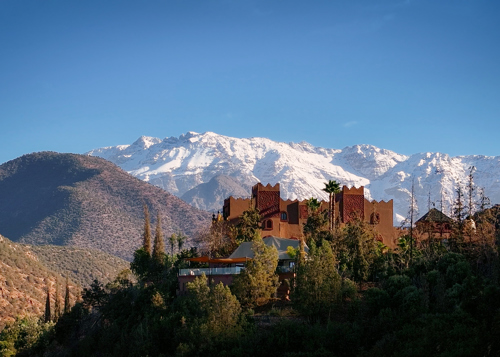
Getting here is the easy part. We’re tucked into the foothills near the village of Asni, about an hour’s drive from Marrakech and its airport. At around 1,320 metres, the air feels noticeably fresher. From almost anywhere you can see Jebel Toubkal, at 4,167 metres the highest peak in North Africa, keeping a watchful eye on things. So, if your perfect day starts on a mountain trail and ends in a hammam, you’re in exactly the right place.
Why stay at Kasbah Tamadot to explore the Atlas Mountains?
Most Atlas adventures start in Marrakech, with an early alarm, a long drive and a weary trip back in the dark. We’d rather you woke up in the mountains. Kasbah Tamadot sits right in the foothills, so the trails for Imlil, the Ouirgane Valley and the Asni Valley start a short drive (or a stroll) from the gate.
Our guides grew up in the villages you’ll walk through, which means they know every shortcut, every view and every family who’ll put the kettle on for mint tea. You do the climbing. We’ll handle everything else, including the hammam afterwards.
The best places to visit near Kasbah Tamadot
1. Imlil and Armed: lunch with a view you’ll bore your friends about
Imlil is the gateway to Toubkal National Park and the starting point for almost every climb up North Africa’s highest mountain. From the village, a guided trek winds up through apple and walnut orchards to Armed, one of the highest villages in the valley. Lunch is served on a rooftop with Toubkal looming so close you’ll feel you could reach out and touch it. Your phone’s camera roll will never recover.
Good to know: Moderate, about 3 km in 4 hours. Best in spring and autumn; in summer, set off early.
2. Mount Toubkal: for the ones who need to reach the top
Some people see a mountain and admire it. Others see a mountain and need to stand on it. If that’s you, Toubkal is waiting. Guided ascents usually start in Imlil, spend a night at the mountain refuge at 3,207 metres, and leave for the summit before dawn, when it’s cold enough to question your life choices. The sunrise from the top answers them. Speak to our team before you arrive and we’ll help with guides and timing. The spa will be ready for your legs when you get back.
Good to know: Challenging, usually two days or more. Best from April to May and September to October. From December to March it becomes a proper winter climb, with crampons, an ice axe and an experienced guide.

3. The Ouirgane Valley: two wheels or two feet
The Ouirgane Valley is where the Atlas comes out to play. The half-day ride (25 to 30 km) bumps and swoops through Amazigh villages and around the lake, with a well-earned stop for mint tea. Feeling ambitious? The full-day route (47 to 50 km) takes in salt mines, forest, the Tizi Ouzla pass and the Kik Plateau. E-bikes are available, and we won’t tell anyone.
Prefer to walk? A gentle trek visits the Amassine Reserve to spot wildlife, then continues to the historic Jewish site at Anraz for a traditional lunch in the village.
Good to know: Easy to challenging. Good all year; in summer, the full-day ride takes shady forest tracks through Toubkal National Park.
4. The Imane and Mizane valleys: birds of prey and big passes
Pack the binoculars. The Imsker and Imnane trek (14 km, 5 hours) follows two valleys looking for the raptors that circle overhead, and ends with a picnic by the river. If you want something that’ll make your calves file a formal complaint, the Aguersioual Pass circuit (15 km, 7 hours) crosses two high passes before rolling down into Imlil.
Good to know: Moderate to challenging. Spring for birdlife, autumn for clear skies.

5. The Kik Plateau, Lalla Takerkoust and Moulay Brahim
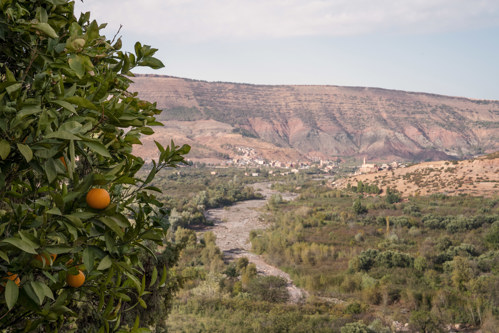
West of Asni, the mountains suddenly step back and the Kik Plateau opens out like someone has drawn back the curtains. On a clear day, the views of the High Atlas are among the widest you’ll get. A half-day drive links the plateau with the Takerkoust reservoir and the hillside pilgrimage town of Moulay Brahim. Rather walk? The Kik trek finishes with a rooftop picnic in Isgane, which is exactly as good as it sounds.
Good to know: Easy by car, challenging on foot. Good all year, and at its most beautiful in late afternoon light.
6. The Ourika Valley via Oukaïmeden
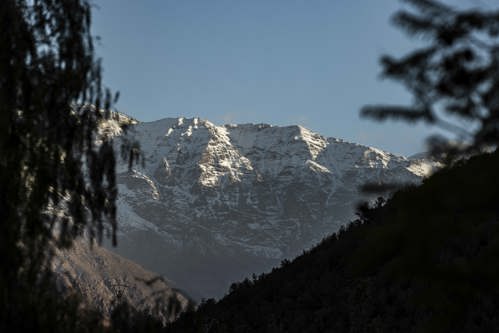
This is a full day of jaw-dropping road. You take the high route past Oukaïmeden, with Toubkal in view, then descend into the lush Ourika Valley. In winter, Oukaïmeden becomes one of Africa’s few ski areas when the snow allows (yes, really). Heavy rain or snow can close the off-road section, so our team will always have a plan B ready.
Good to know: Easy, 6 to 7 hours by car. Best in spring and autumn; in winter, depending on the weather.
7. The Eve Branson Foundation craft houses
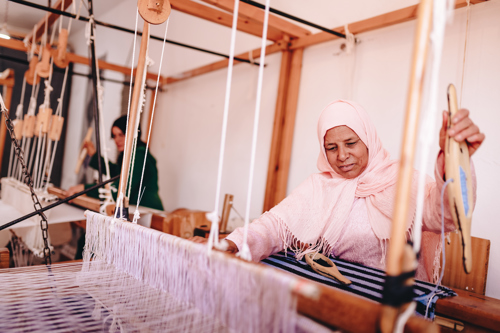
Some of the best hours in the Atlas have nothing to do with summits. Since 2005, the Eve Branson Foundation has worked with the Amazigh communities around Kasbah Tamadot. It runs craft houses where young women and men learn traditional skills. Visit the woodwork and weaving centres in Tansghart and Tamgounssi and meet the artisans over mint tea. Ask about having a go on the loom; it’s harder than it looks. Whatever you take home will have a story attached, and it supports the community where it was made.
Good to know: Easy, about 2 hours. Good all year.
8. Closer to home: the Anfa trek and the Asni Valley
You don’t need to go far to get your heart racing. The Anfa trek sets off through fragrant juniper forest and climbs steadily to Asloun peak, where the whole Asni Valley opens out beneath you. It’s short, steep and very satisfying, and you’ll be back in plenty of time for lunch by the pool.
Good to know: Challenging, 6 km in about 3 hours. Best in spring and autumn, and on crisp winter mornings.
When is the best time to visit the Atlas Mountains?
Every season has its own kind of adventure. Here’s what to expect from Kasbah Tamadot through the year.
Spring (March to May)
The valleys turn green, the orchards burst into blossom and snow still dusts the high peaks, so your photos will look a little too good to be true. Mild days make spring one of the best times for trekking and birdwatching. The Imlil to Armed trek and the Imane Valley walk are at their finest.
Summer (June to August)
Marrakech sizzles, but up here at 1,320 metres it’s noticeably cooler. The trick is to start early: a dawn ride on the shady summer bike route through Toubkal National Park, or a morning trek before the heat builds. Then do as little as possible by the infinity pool and finish the day with a film under the stars.
Autumn (September to November)
Settled weather, clear skies and harvest time in the valleys make autumn a favourite with keen walkers. It’s the sweet spot for a Toubkal ascent and for big days on foot, such as the Aguersioual Pass circuit.
Winter (December to February)
Snow covers the peaks, the days are crisp and bright, and the nights are made for crackling fires and something warming in a glass. Experienced adventurers can take on a winter Toubkal climb with a guide. Lower valley walks stay open, and the Asounfou Spa has never felt so welcome.
After the adventure
Here’s the best bit about adventuring from Kasbah Tamadot: the ending. There’s an infinity pool facing the mountains, a heated indoor pool and an open-air hot tub that does wonders for tired legs. The Asounfou Spa offers hammam rituals inspired by Amazigh traditions. The cookery class turns three hours in the kitchen into three courses on your dinner table. On selected evenings, there are films under the stars.

FREQUENTLY ASKED QUESTIONS
How far is Kasbah Tamadot from Marrakech?
About an hour by car from both Marrakech city centre and Marrakech Menara Airport.
Can you climb Mount Toubkal from Kasbah Tamadot?
Yes. Ascents start in Imlil, a short drive from the Kasbah, and usually take two days with a night at the mountain refuge. Speak to our team before you travel and we’ll help arrange a qualified guide.
What is the best month for hiking in the Atlas Mountains?
April, May, September and October offer the most settled weather and comfortable temperatures for trekking.
Is the Atlas Mountains worth visiting in winter?
Absolutely. Snowy peaks, clear skies and quiet trails make winter very special. High routes need specialist kit and a guide, while the lower valley walks stay open.
What is the Eve Branson Foundation?
A charity that has supported the Amazigh communities around Kasbah Tamadot since 2005. Guests can visit its craft houses to meet the artisans and discover traditional weaving and woodwork.
Do I need a guide in the High Atlas?
For anything beyond the village paths, yes. Every trek and ride we arrange is led by local guides who know these mountains best.
Ready to swap the city for the summits? Explore Kasbah Tamadot’s activities and start planning your Atlas adventure now.
Even more inspiration

Best time to visit Morocco’s majestic Atlas Mountains
The foothills of the Atlas Mountains are home to Kasbah Tamadot, a tranquil retreat located just an hour’s drive from Marrakech. Considering a visit but not sure when to travel? Our handy guide breaks it all down.

Finding Wellness in the Heart of the Atlas Mountains: Retreat to Kasbah Tamadot
Whether you're practising sunrise yoga with panoramic mountain views, indulging in nourishing local cuisine, or unwinding in a traditional Moroccan hammam, every moment at Kasbah Tamadot invites you to reconnect with nature, culture, and yourself.

Things to do in the Atlas Mountains: A luxury travel guide from Kasbah Tamadot
From serene mountain walks and traditional village encounters to wellness rituals and culinary moments under the stars, Kasbah Tamadot offers more than just a stay. It’s an invitation to slow down, connect, and experience Morocco in a way that’s both deeply luxurious and profoundly personal.